Certificate in Mental Health Education – Neuroscience, Psychology and Applied Practice

Cutting-Edge, Evidence-Based Mental Health Education Resources and Certificated Training: Neuroscience, Psychology and Applied Practice
Awarded by The Institute for Arts in Therapy and Education Higher Education College London UK and Academic Partner of University of East London. Materials written by Dr Margot Sunderland, Senior Psychotherapist with over 24 published books/resources in mental health, including British Medical Book Awards.
Fees £1975 | Apply now
What delegates say:
“This training has changed the way I understand children, people and myself. It’s hugely influenced how I am with the people in my life and with children and colleagues at school.”
Sophie Bell
“An exceptional training experience. The knowledge, skills and personal insights I gained have influenced every aspect of my work and enriched my relationships with my family.”
Fatima Al-Mansouri
Meet the author of the materials
 Dr Margot Sunderland: neuroscience scholar, award-winning author and leading psychotherapist. British Medical Association award winning author. Author of 20 published books in the field of child mental health, translated into 18 languages and published in 24 countries. Author of Master’s Degree Programmes in Child Psychotherapy.
- Author of the internationally acclaimed The Science of Parenting (Dorling Kindersley), First Prize winner of the British Medical Association Medical Book Award, endorsed by internationally acclaimed affective neuroscientist Professor Jaak Panksepp.
Director of Education and Training, The Centre for Child Mental Health, London (disseminating the latest research on child mental health for over 25 years). - Co-Director, Trauma-Informed Schools UK (TISUK), whose training has reached over 6,000 schools and organisations and more than 20,000 professionals across the UK.
- Chief Executive and Founding Director of The Institute for Arts in Therapy and Education (IATE), academic partner of the University of East London, and author of the Master’s Degree in Child Psychotherapy.
- Former member of the Early Years Commission, Centre for Social Justice, and co-author of the influential cross-party report The Next Generation.
- International keynote speaker, lecturer, and media contributor on child development, parenting, trauma, attachment, neuroscience, and mental health.
- Passionate about bringing the latest brain science and psychology to parents, educators, and mental health professionals to help children and young people thrive.
"I can honestly say that it was, by far, the best, most insightful, profoundly moving, endlessly fascinating, relevant and – as I am sure will become clear in time – the most useful training I have received in my teaching career.”
Thomas Mann
Why These Resources and Training Matter
In an age obsessed with mental health, it is astonishing how many children and teenagers leave school understanding almost nothing about how their brains, minds, emotions and relationships actually work. They may learn coping strategies, breathing exercises and anti-stigma messages – but rarely the deeper psychology and neuroscience of why people feel good and why they suffer, what drives feelings such as panic, shame, heartbreak or despair, and what genuinely helps people heal from mental health problems. Yet it is this knowledge they need to live life well.
So, these resources and this powerful and accessible training move far beyond superficial wellbeing approaches. Informed by over 1000 research papers, they blend key knowledge from neuroscience, psychology and psychotherapy to offer the emotional education children and teenagers urgently need. At a time of rising emotional distress, deep emotional understanding is no longer optional – it’s life-protecting.
Furthermore, research shows that standardised mental health programmes focused primarily on coping strategies alone, don’t work (Foulkes 2024)*. This is hardly surprising. We would never accept physics being taught without physicists or biology without biologists, yet much mental health education remains disconnected from the rich knowledge of psychology, affective neuroscience, attachment research and trauma recovery.
*Foulkes (2024) The problem with mental health awareness. The British Journal of Psychiatry
What’s Included in Your Done-for-You Whole-School Wellbeing Implementation Package
Everything you need to deliver a high-quality, evidence-informed mental health education programme that enhances student wellbeing and emotional health. Designed to make implementation simple and impactful, this comprehensive package provides all the resources, tools, and guidance needed to embed a whole-school approach to wellbeing with confidence.
10 engaging webinars exploring what we mean by good mental health and then the causes of mental health and relationship difficulties, and pathways to healing. Full access for any member of staff in your school or organisation.
- Professional presentation slides for all topics (see the full list of topics below).
- Full-length mental health film, performed by teenagers for teenagers (one-year licence included).
- Powerful film clips bring the learning to life through real-life case studies of journeys from stress to recovery.
- The Belonging Audit: A toolkit to ensure all staff and students feel known, valued and seen
- Detailed lesson plans, teaching resources and facilitator notes for every topic.
- Mental health resource cards and ‘Talking About Feeling’ cards, with accompanying booklets essential to support teenagers to talk freely in student small-group discussions and one-to-one sessions.
- Beautiful printable handouts for students.
- Qualification for two members of staff. Certificate in Mental Health Education, Neuroscience, Psychology and Applied Practice. Assessment for two members of staff who wish to attain the award: (Additional staff members may undertake the assessment for an additional fee.) Please see details of the assessment below.
Course Modules (Webinars)
For all your staff: watch anytime, anywhere (available for a year)
- Your emotional brain. The science of feeling good and feeling bad.
- What are mental health problems and how do they develop?
- Making sense of specific mental health symptoms.
- How people heal and recover from mental health problems.
- Relationship Intelligence: Having the best relationships you can.
- Whole school implementation of psychology and neuroscience informed practice to promote mentally healthy cultures.
- Key listening skills and therapeutic interventions for vulnerable children.
- Using arts and imagery to help people talk about their lives.
- Using storytelling and story listening as therapeutic tools with children and teenagers.
- Use of emotion cards with children and teenagers to help them talk about their feelings.


Why Schools and Other Settings Choose This Programme
- A complete, evidence-based mental health education programme that equips schools with the knowledge, resources and confidence to transform how children and young people understand emotional wellbeing, mental health struggles and recovery.
- Engaging and entirely relatable to – resources are designed to connect with children and young people at a deeply human level.
- Practical and immediately applicable – translates complex neuroscience into everyday accessible language to inform effective interventions.
- Relational wellbeing – recognises the profound impact of positive relationships on mental health and how to optimise this in your setting.
- Culturally responsive and globally relevant – adaptable to diverse cultural contexts and schools and other communities.
- Promotes inclusion, belonging and connection – helping every child feel seen, valued and understood.
Outcomes for Your School or Organisation
By implementing this programme, your school or setting can expect:
- A reputation for excellence in wellbeing and mental health education, demonstrating a commitment to evidence-informed practice and whole-child development.
- A school community where children, young people and staff have a deeper understanding of emotions, relationships, mental health – creating the conditions for better learning, belonging and flourishing.
- Increased staff confidence, knowledge and capability in supporting children’s emotional wellbeing and mental health.
- Improved emotional literacy and enhanced pupil psychological awareness so they are more able to reflect instead of reacting.
- Reduction in challenging behaviours through a deeper understanding of underlying distress and its causes.
- Earlier identification and support for emotional difficulties, helping prevent problems from becoming entrenched.
- Eligible to apply for the Mentally Healthy School Award (please write in for details)

Your package includes: Exclusive licence to show full length film performed by teenagers for teenagers
What Every Teenager Needs to Know About Mental Health
About this Mental Health Education Film
- A powerful one-hour professional film, performed by teenagers for teenagers.
- Grounded entirely in evidence-based neuroscience and psychology, the film helps young people understand what’s happening in their brains, minds and bodies when they experience mental health difficulties – in ways that feel accessible, relatable and deeply validating.
- Through moving true stories of teenage distress to recovery, teenagers are helped to feel seen, heard and less alone.
- Teenagers who have watched the film tell us they feel immense relief in realising they are not ‘mad’ or ‘bad’, but struggling with understandable responses to painful life experiences.
- The film explores the causes – and healing – of common mental health difficulties including anxiety, panic attacks, social phobias, depression and complex PTSD. It aims to help teenagers think psychologically about themselves and others.
- Watch the trailer below
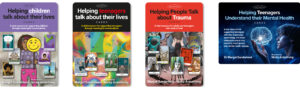
Your package includes the below card packs. These are key for group discussions and/or one-to-one sessions (you can also order more).
These resources support children and teenagers to have meaningful conversations in small safe groups about their lives. This so often brings a real shift from self-help to seeking help and on to living a more fulfilling life with self-awareness, self-esteem and psychological knowing. The resources also give children and teenagers the knowledge and language they need to fully understand the causes of mental health symptoms: why they act and feel the way they do. Then most importantly how they can enjoy a symptom-free life.
The resources are informed by our years of experience in 6000 schools and settings across the UK and internationally with children and young people.
Topics covered on the training
What you will learn on the training. From this vast menu, you can simply pick and choose the topics with resources that you want to include in your programme.
Your Emotional Brain: The Science of Feeling Good and Feeling Bad
- How can understanding my brain’s emotion chemicals help me live life better?
- What does good mental health feel like?
- What’s the brain science of feeling good?
- Can good mental health lead to good physical health?
- Why does being with people I like feel so good?
- If human connection is so powerful in releasing feel good chemicals, will texting do the same thing?
- Why does being creative with people I like feel so good?
- What’s the brain chemistry of contentment, fun, joy, love?
- What brain chemicals drive energised engagement in life and how can you activate them more?
- Do celebrities have more powerful feel-good chemicals than me?
- Why do I often feel low until I’ve eaten some proper food?
- When I’m happy, why can’t I just keep the feeling going?
- Why is emotional pain so painful?
- Why does feeling shamed or disapproved of feel so awful?
- Why does rejection and heartbreak hurt so much?
- What can I do to ease the pain of loss?
- I’ve suffered losses that I know I’ve never really mourned – does it matter?
- Can I get ill by pushing down my feelings?
- Why does emotional pain lead some teenagers to risky behaviour?
- What’s the difference between fear and anxiety?
- What’s healthy anger and what’s destructive anger?
- Why do certain little things upset me so much?
- Why do I sometimes suddenly get angry, then regret it afterwards?
- When I’m upset, why can’t I ‘just calm down’?
- Sometimes I feel so tired, then I have a power nap and feel amazing. What’s going on in my brain?
What are mental health problems and how do they develop?
- Are mental health problems illnesses?
- Do mental health problems come from a chemical imbalance that medication can fix?
- Am I weak for having mental health problems? Shouldn’t I just be more resilient?
- Do labels like “disorder” help and bring recovery?
- Was Freud right about what he said about mental health problems?
- Why do some painful life experiences turn into mental health problems while others don’t?
- Surely the past is past – just get on with life, focus on the present and the future – right?
- What’s the difference between good stress and bad stress?
- What has stress got to do with mental health problems?
- So many different sorts of stress – everyday stress, post-traumatic stress (PTSD), Complex PTSD. What’s the difference?
- Can a parent’s painful life experiences affect their child’s mental health?
- Can relationships with parents shape mental health – for better or worse?
- Why do some people use health-harming behaviours (self-harm, drugs, vaping, alcohol, food restriction) to numb emotional pain and other people don’t?
- I’ve had bad things happen in my life that I’ve never really told anyone about. Does it matter?
- How can I move from mental health struggles to good mental health?


Making sense of specific mental health symptoms
- Why does depression hurt?
- What causes depression?
- What’s the difference between feeling low and major depression?
- When I can’t find the motivation to do anything, is it laziness or trauma?
- Why do I have problems sleeping?
- Some people say depression is a coping mechanism – is that right?
- What childhood experiences make you vulnerable to depression in later life?
- If you’ve had them, how can you make yourself not vulnerable now?
- What causes anxiety?
- How do I know if my anxiety is normal or whether it’s a mental health problem?
- What’s the brain science behind rumination, catastrophising, panic attacks, phobias, obsessive-compulsive rituals?
- Why can’t I just snap out of my phobias, obsessive rituals? How can I stop them?
- Why do I sometimes have frightening or disturbing thoughts – even though I know I would never act on them?
- Why am I frightened of places with lots of people in them?
- Why am I repeatedly worried that something is terribly wrong with my body?
- Why am I obsessed with body flaws? I know I look in the mirror far too much.
- Will I always be anxious?
- Why do some people hurt their bodies?
- Why don’t I like myself?
- What causes the negative voices in my head that criticise me so much?
- Why do I sometimes feel detached from reality or myself?
- Why do I sometimes hear voices? Does it mean I’m mad?
- Why is food such a big deal for me: eating it/not eating it?
- Are eating disorders just a case of getting better habits around food?
- How can I move from mental health struggles to good mental health?
How people heal from mental health problems
- Can’t I just heal my own mental health problems?
- Can’t I just talk to a friend or read self-help books or go on social media?
- Can’t I just think myself out of emotional pain?
- What helps people get better – because ‘take a bath’ or ‘just meditate’ feel like a joke?
- Will antidepressants fix things?
- How do minds in torment get better through a therapeutic relationship?
- I’ve heard people say, ‘What is shareable is bearable’ – is that right and who should I tell?
- What makes a relationship therapeutic?
- What happens in an effective therapeutic relationship?
- How can a therapeutic relationship change my brain, mind, and body long-term?
- Isn’t it dangerous telling someone about your painful life experiences?
- What actually happens in a therapy/counselling session or group session?
- Do I really need therapy, or am I just overreacting?
- Do I have to talk about things I’m not ready to talk about?
- Is something wrong with me because I need therapy?
- Will my friends think I’m weird if they find out?
- How long does it take before you trust a therapist?
- What if the therapist thinks I’m weird? Will they judge me? Will they like me?
- Can they cope with how bad I really feel? What if I’m too much for them?
- Can someone really understand me if they’ve never lived my life?
- How do you know if a therapist/counsellor is any good?
Having the best relationships you can
- What can I say in a conversation with someone I really like, when I don’t know what to say?
- How do good relationships work?
- Are painful relationships bad for my health and lovely relationships good for my health?
- How do people make up well after a bad argument?
- When a relationship goes wrong, how can I repair it?
- When someone important in my life asks me what I feel, why don’t I know?
- How do I know if someone genuinely cares about me?
- How do I leave a bad relationship when part of me still wants to stay?
- How can I deepen my emotional connection with someone?
- Why can’t I say no in case I upset them?
- How can I stand up for myself more?
- Why do I find it so hard to trust people?
- Why do I always need reassurance that the person I like, likes me?
- Why do I push people away when I care about them?
- Why do I want closeness, then feel suffocated by it?
- Why do I choose people who make me feel bad about myself?
- Why do I get so anxious if they take hours to reply to my texts?
- Why do I fear getting close to people?
- Why do I compare myself to everyone else?
Frequently Asked Questions
Read our FAQs
About the training award
Certificate in Mental Health Education Neuroscience, Psychology and Applied Practice
Awarded by Higher Education College and Academic Partner of University of East London UK, The Institute for Arts in Therapy and Education.
Included in your package are places for two of your members of staff to gain this prestigious award. They will watch the webinars just like the other staff members but then go on to take an assessment. They will be asked to write 300 words on their understanding of each of the ten modules, focusing on key concepts, practical strategies and their takeaways from the case material. As this is a work-based learning programme, they will also be asked to send in a 20-minute recorded case study showing how they have implemented some of the resources in their school or setting.
It is possible to purchase additional places so that more staff in your school or setting can attain the award.
Fees £1975 | Apply now
Or for free webinar about the training and resource package and any other queries please email margot@childmentalhealthcentre.org
apply now